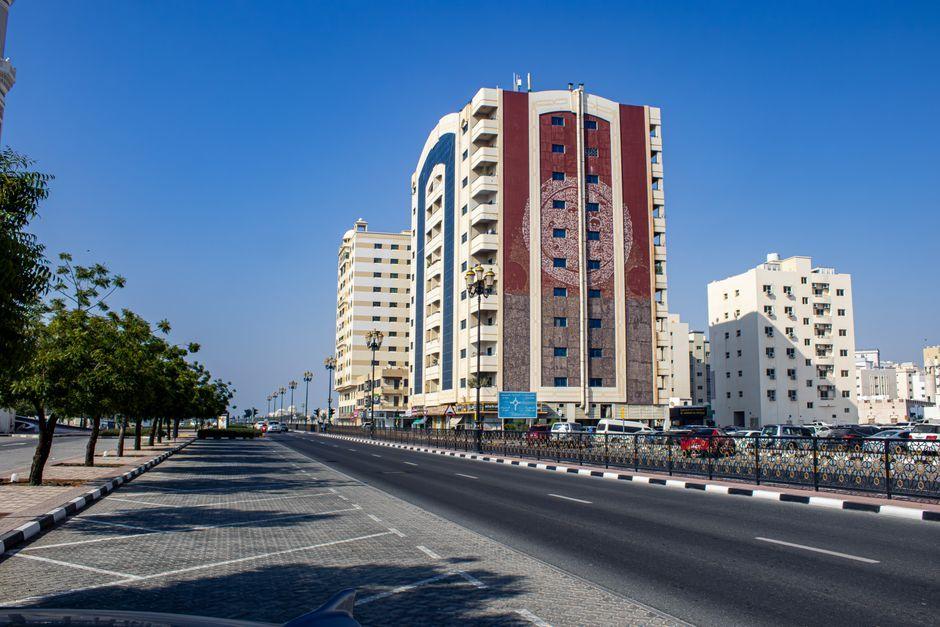
Establishing a Company in Meydan Dubai: Legal Steps and Requirements
Establishing a company in Meydan Dubai follows defined legal steps under UAE law and local regulations.
This article explains the process of setting up a business in Meydan, Dubai, covering legal structure selection, required approvals, document preparation, and registration with either the DED or Meydan Free Zone Authority. Readers will understand the key requirements for mainland LLCs, free-zone entities, and foreign branches, and how a company formation lawyer Dubai can ensure compliance.
Reviewed by Mohamed Noureldin, Founder, Managing Partner & Senior Legal Consultant
Establishing a company in Meydan, Dubai, involves selecting a legal structure, securing initial approvals, preparing and notarising the memorandum of association, and registering with the DED or Meydan Free Zone Authority, all under the UAE Federal Decree-Law No. 32 of 2021 on Commercial Companies and the relevant emirate regulations.
Steps to Establish a Company in Meydan Dubai: Legal Requirements and Procedures
Establishing a company in Meydan, Dubai, requires compliance with the UAE Federal Decree-Law No. 32 of 2021 on Commercial Companies and the relevant Dubai Emirate regulations; the process involves selecting a legal structure, obtaining initial approvals, drafting the memorandum of association, and completing registration with the Department of Economic Development (DED) or the Meydan Free Zone Authority, depending on the chosen jurisdiction.
Related Services: Explore our UAE Mainland Company Formation and UAE Freezone Company Formation services for practical legal support in this area.
WHAT LEGAL STRUCTURE SHOULD I CHOOSE FOR A MEYDAN COMPANY?
Short answer: You may opt for a mainland limited liability company (LLC) registered with the DED, a free-zone establishment (FZE) or free-zone company (FZC) within Meydan Free Zone, or a branch of a foreign company; each structure carries distinct ownership, liability, and licensing rules under UAE Federal Decree-Law No. 32 of 2021 and the specific free-zone regulations.
Development:
For a mainland LLC, the law mandates that at least 51 % of the shares be held by a UAE national or a company wholly owned by UAE nationals, unless the activity falls under the list of permitted 100 % foreign-owned sectors outlined in Cabinet Decision No. 1 of 2021; the LLC must have a minimum of two and a maximum of fifty shareholders, and liability is limited to the amount of share capital contributed. In Meydan Free Zone, investors may own 100 % of the equity, and the free-zone authority issues the trade licence; the free-zone company is considered a separate legal entity, and its liability is confined to the assets within the zone. A branch of a foreign company is permitted only for professional or commercial activities approved by the DED, and the branch operates under the parent company's liability, requiring a local service agent who is a UAE national. The choice depends on factors such as desired market access, ownership preferences, and the nature of the business activity; consulting a company formation lawyer Dubai helps align the structure with strategic goals while ensuring compliance with the applicable legal framework.
WHAT ARE THE INITIAL APPROVALS NEEDED BEFORE REGISTRATION?
Short answer: You must obtain a trade name reservation, initial approval from the relevant authority (DED for mainland or Meydan Free Zone Authority for free-zone), and, if applicable, external approvals from sector-specific regulators (e.g., Dubai Health Authority for medical services) before proceeding to document preparation.
Development:
The first step is to reserve a trade name that complies with the naming conventions set out in DED's Trade Name Regulations; the name must not contain offensive language, must not be identical to an existing registered name, and must include the legal form suffix (LLC, FZE, etc.). Once the name is reserved, you submit an application for initial approval, which includes a brief description of the intended activity, the proposed share capital, and the details of the shareholders and managers. For mainland companies, the DED issues the initial approval after verifying that the activity is permitted and that the foreign ownership percentage complies with the foreign direct investment regime. In Meydan Free Zone, the authority conducts a similar review, focusing on the free-zone's permitted activity list and ensuring that the proposed business does not violate any zone-specific restrictions. Certain activities-such as education, telecommunications, or financial services-require additional clearance from the relevant federal or Dubai-level regulator; failure to secure these approvals results in the rejection of the registration application. The timeline for obtaining initial approvals typically ranges from three to five working days, provided all documents are complete and accurate.
WHICH DOCUMENTS MUST BE PREPARED FOR THE MEMORANDUM OF ASSOCIATION?
Short answer: The memorandum of association (MOA) must contain the company's name, legal form, registered address, objectives, share capital, shareholder details, management structure, and any special provisions, and it must be notarised and attested according to UAE Federal Decree-Law No. 32 of 2021, Article 76.
Development:
Article 76 of the Commercial Companies Law prescribes the mandatory contents of the MOA for LLCs and similar entities. The document must state the exact trade name, the legal form (e.g., LLC), the registered office address within the emirate, and a clear statement of the company's objectives, which must be specific enough to delineate the permitted business activities. The authorised share capital, the number of shares, and the nominal value per share must be specified, along with the details of each shareholder-name, nationality, passport number, and the number of shares subscribed. The MOA also appoints the first manager(s) or board of directors, outlining their powers, remuneration, and term of office. Any additional clauses-such as restrictions on share transfer, profit distribution policies, or dispute-resolution mechanisms-must be included if the parties wish to deviate from the default statutory provisions. After drafting, the MOA must be signed by all shareholders in the presence of a notary public; the notarised copy is then submitted to the DED or the free-zone authority for attestation. In free-zone settings, the authority may provide a standard MOA template that satisfies the legal requirements, reducing the need for extensive customisation. The entire preparation and notarisation process usually takes two to three working days, assuming all shareholder information is readily available.
HOW IS THE COMPANY REGISTERED AND WHAT ARE THE ASSOCIATED FEES?
Short answer: Registration involves submitting the attested MOA, the initial approval certificate, the trade name reservation, and the required identification documents to the DED (mainland) or Meydan Free Zone Authority; the authority then issues the trade licence, and the company is entered in the commercial register, with fees varying based on legal form, share capital, and activity type.
Development:
For mainland LLCs, the applicant files the completed set of documents through the DED's online portal or at a service centre; the DED reviews the submission for compliance with the Commercial Companies Law and the specific activity regulations. Upon approval, the DED issues the initial trade licence and registers the company in the Commercial Register, assigning a unique commercial registration number. The fees consist of a name reservation charge (approximately AED 500), an initial approval fee (around AED 1,000), a MOA attestation fee (about AED 500-1,000 depending on the notary), and a licence issuance fee that scales with the share capital-typically AED 10,000 for a standard LLC with share capital up to AED 1 million, plus additional amounts for higher capital. In Meydan Free Zone, the authority provides a consolidated fee schedule that includes the name reservation, initial approval, MOA processing, and licence issuance; a typical FZE licence with share capital of AED 50,000 costs roughly AED 15,000-AED 20,000, covering the free-zone registration, visa quota, and office flexi-desk if required. Payment is made electronically, and the licence is usually issued within one to two working days after all fees are settled. The company may then proceed to open a corporate bank account, apply for employee visas, and commence operations.
WHAT POST-REGISTRATION OBLIGATIONS MUST BE FULFILLED?
Short answer: After registration, the company must register for VAT if taxable supplies exceed AED 375,000 annually, enroll employees with the Ministry of Human Resources and Emiratisation (MOHRE), obtain any required sector-specific licences, and maintain proper accounting records and annual audits as stipulated by UAE Federal Decree-Law No. 32 of 2021 and the Commercial Companies Law.
Development:
VAT registration is mandatory for businesses whose taxable turnover surpasses the threshold set by Federal Decree-Law No. 8 of 2017 on Value Added Tax; the application is submitted through the Federal Tax Authority's portal, and a VAT number is issued within twenty business days. Employers must register each employee with MOHRE, secure a labour card, and arrange for health insurance in accordance with Dubai Health Authority regulations. Depending on the activity, additional licences may be needed-for example, a tourism licence from the Department of Tourism and Commerce Marketing for hospitality businesses, or a financial permit from the Dubai Financial Services Authority for advisory services. The law requires companies to keep accurate books of account, prepare annual financial statements, and, for LLCs with share capital exceeding AED 1 million, to have those statements audited by a licensed auditor. Failure to comply with these ongoing obligations can result in fines, suspension of the trade licence, or restrictions on visa quotas. Regular compliance checks, ideally conducted with a company formation lawyer Dubai, provide that the company remains in good standing with all regulatory bodies.
FREQUENTLY ASKED QUESTIONS
What is the minimum share capital required for a mainland LLC in Dubai?
The UAE Federal Decree-Law No. 32 of 2021 does not prescribe a universal minimum share capital for LLCs; however, certain activities may impose a capital threshold set by the relevant regulator. For most general trading and service activities, there is no statutory minimum, but the DED may request proof of sufficient funds to cover initial operational expenses.
Can a foreign investor own 100 % of a Meydan Free Zone company?
Yes. Meydan Free Zone permits 100 % foreign ownership for establishments and companies registered within the zone, as stipulated by the free-zone's regulatory framework, which operates independently of the UAE Commercial Companies Law's foreign ownership restrictions.
How long does it take to obtain a trade licence in Meydan Free Zone?
Assuming all documents are complete and approvals are secured, the Meydan Free Zone Authority typically issues the trade licence within one to two working days after payment of the prescribed fees.
Is a local service agent required for a branch of a foreign company in Meydan?
Yes. For a branch operating in the mainland (including Meydan if registered with the DED), Federal Decree-Law No. 32 of 2021, Article 21, mandates the appointment of a local service agent who is a UAE national or a company wholly owned by UAE nationals; the agent facilitates liaison with government authorities but does not participate in management or profit sharing.
What are the penalties for late renewal of a trade licence in Dubai?
Late renewal incurs a fine of AED 100 per day for each day the licence remains expired, up to a maximum of AED 500, as outlined in the DED's Licensing Regulations; continued operation without a valid licence may lead to suspension of the licence and additional administrative penalties.
Do I need to audit my company's financial statements if my share capital is below AED 1 million?
For LLCs with share capital below AED 1 million, an external audit is not mandatory under Article 26 of the Commercial Companies Law, although the company must still maintain proper accounting records and may opt for a voluntary audit to enhance credibility with banks and investors.
If your matter involves Steps to establish a company in Meydan Dubai: requirements and legal procedures in the United Arab Emirates, you are welcome to request a consultation with Nour Attorneys. Our team can assess your position under the law currently in force and outline the options available to you. Request a consultation
This article is provided for general informational purposes only and does not constitute legal advice. Reading this article or contacting Nour Attorneys through this website does not create an attorney-client relationship; such a relationship arises only after a conflicts-of-interest check and a signed engagement agreement. Do not send confidential information through this website; information submitted before engagement is not protected by legal privilege. Past results do not guarantee future outcomes. The firm's lawyers practice in the jurisdictions stated in their individual profiles; this article addresses the law of the United Arab Emirates only.
DISCLAIMER
This article is for informational purposes only and does not constitute legal advice.
Additional Resources
Explore more of our insights on related topics: