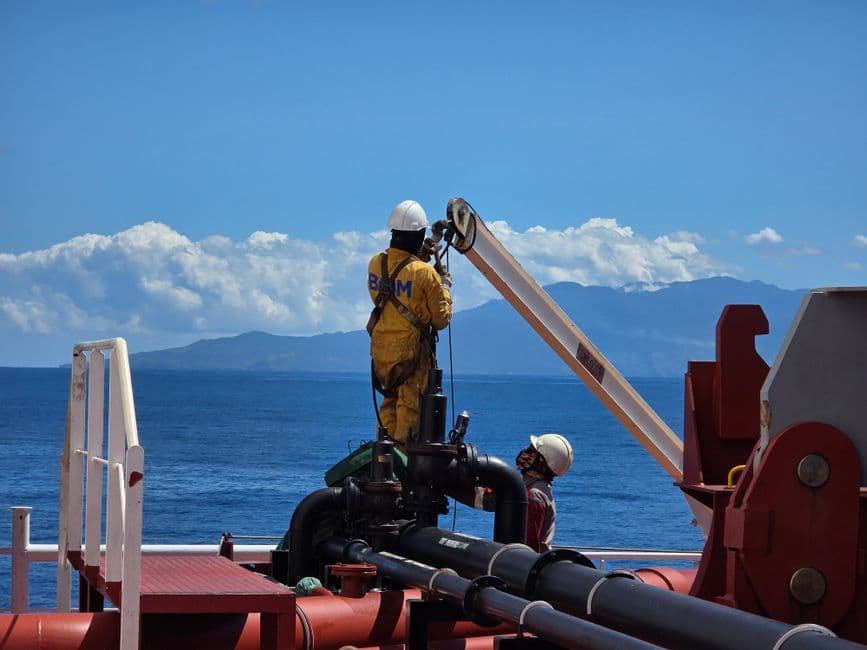
Oil and Gas Employment Trends in Dubai: Legal Guidance
The UAE's oil and gas sector is expanding employment and offering higher salaries compared to other Dubai industries.
This article explains recent ADNOC-driven employment trends in the oil and gas sector, highlights salary premiums and benefits for professionals, and outlines essential contractual provisions under UAE Labour Law. Readers gain a clear understanding of hiring patterns, compensation benchmarks, and legal considerations for employment contracts in Dubai's oil and gas industry.
Reviewed by Mohamed Noureldin, Founder, Managing Partner & Senior Legal Consultant
The UAE's oil and gas sector continues to expand, driven by ADNOC's ambitious workforce growth plans and a series of large-scale upstream and downstream projects. Employment relations for mainland Dubai entities are governed by Federal Decree-Law No. 33 of 2021 (UAE Labour Law) and its supporting ministerial decisions.
Related Services: Explore our Non-Compete Agreement and Drafting Contracts & Agreements services for practical legal support in this area.
WHAT ARE THE CURRENT EMPLOYMENT TRENDS IN ADNOC-LINKED OIL AND GAS PROJECTS?
ADNOC's latest workforce data reveal a 12 % increase in direct hires for upstream and downstream positions over the past 18 months. This rise is concentrated in specialist roles such as reservoir engineers, drilling supervisors, HSE officers, and digital-asset analysts. The growth mirrors ADNOC's 2023-2025 investment programme, which earmarks roughly USD 4 billion for new processing plants, offshore platforms, and integrated gas-to-value chains.
The strategic shift toward an integrated value chain demands not only traditional technical expertise but also project-management professionals capable of coordinating multi-disciplinary teams across onshore facilities, offshore rigs, and downstream refineries. Service-provider companies that supply ADNOC with drilling, logistics, and maintenance solutions are expanding their own headcounts to meet tighter contract milestones and to satisfy ADNOC's heightened focus on local content and Emiratisation targets.
Recruitment agencies operating in Dubai report a marked preference for candidates who possess UAE-based experience, particularly those who have completed certifications from internationally recognised bodies such as the Society of Petroleum Engineers (SPE), the International Association of Drilling Contractors (IADC), or NEBOSH for health and safety. Employers also value proficiency in Arabic and familiarity with UAE-specific regulatory frameworks, as these reduce onboarding time and improve compliance with ADNOC-mandated HSE standards.
HOW DO SALARY STRUCTURES FOR OIL AND GAS PROFESSIONALS COMPARE TO OTHER SECTORS IN DUBAI?
According to ADNOC's 2024 remuneration survey, the average base salary for mid-level engineers in the oil and gas industry falls between AED 25 000 and AED 35 000 per month. This band is approximately 15 % higher than the median compensation for comparable engineering roles in retail, hospitality, or general trading sectors.
The premium reflects several factors: the specialised skill set required for reservoir modelling, well-control operations, and process safety; the higher risk profile associated with offshore and onshore hydrocarbon activities; and the need to attract and retain talent in a competitive global market.
Typical benefits packages extend beyond basic pay and often include:
- Housing allowances that cover a significant portion of rental costs in Dubai's premium districts.
- Annual flight tickets for home-country leave, sometimes accompanied by a cash equivalent for employees who opt not to travel.
- End-of-service gratuities calculated under Article 51 of the UAE Labour Law, which are paid in addition to any accrued leave encashment.
- Medical insurance that meets or exceeds the minimum standards set by the Dubai Health Authority.
Employers must also observe Ministerial Decision No. 764 of 2022, which establishes minimum wage thresholds for each occupational level. Failure to meet these thresholds can result in administrative penalties and may affect the validity of employment contracts during labour inspections.
WHICH CONTRACTUAL PROVISIONS ARE ESSENTIAL FOR EMPLOYMENT CONTRACTS IN THIS INDUSTRY?
Article 11 of Federal Decree-Law No. 33 of 2021 mandates that every employment contract contain, at a minimum, the job description, place of work, probation period, and remuneration details. In the oil and gas context, employers routinely augment these core elements with industry-specific clauses:
- Shift work and overtime - Detailed provisions outlining shift patterns, rest periods, and overtime compensation, all of which must stay within the limits prescribed by Article 23 (overtime) and Article 24 (night work).
- Hazardous-area allowances - Additional compensation for work performed in zones classified as high-risk (e.g., offshore platforms, sour gas facilities), calibrated to reflect the increased exposure to potential harm.
- Confidentiality and intellectual-property - Clauses safeguarding proprietary exploration data, seismic surveys, and drilling technologies. These must be drafted to respect the employee's right to reuse general skills and knowledge after termination, as clarified in Article 12.
- Mobility and relocation - Terms addressing potential transfers between onshore sites, offshore installations, or international ADNOC affiliates, including any associated relocation.
- Training and certification - Obligations for the employer to fund or facilitate mandatory HSE training, technical upskilling, and renewal of professional licences.
Each of these provisions must be consistent with the overarching framework of the UAE Labour Law; any clause that attempts to waive statutory entitlements (such as end-of-service gratuity or minimum notice periods) is void.
HOW DOES THE UAE LABOUR LAW REGULATE TERMINATION AND END-OF-SERVICE BENEFITS FOR OIL AND GAS WORKERS?
Termination procedures are anchored in Articles 43-45 of Federal Decree-Law No. 33 of 2021. For unlimited contracts, either party must provide a minimum notice of 30 days, or pay in lieu of notice under Article 44. Fixed-term contracts follow the notice periods stipulated in Article 45, which vary according to the contract's duration.
End-of-service gratuity is calculated under Article 51. An employee receives 21 days' wages for each of the first five years of service and 30 days' wages for each subsequent year, based on the last basic wage. The calculation excludes allowances such as housing or transportation unless those allowances are expressly defined as part of the basic wage in the contract.
Before issuing a final settlement certificate, employers must settle:
- Any outstanding overtime pay (Article 23).
- Accrued but untaken annual leave (Article 29).
- Repatriation costs, if applicable, as outlined in Ministerial Decision No. 765 of 2022.
Failure to comply with these requirements can lead to claims before the Labour Court, where the employee may seek payment of owed sums, compensation for unfair dismissal, or reinstatement.
WHAT HEALTH AND SAFETY OBLIGATIONS APPLY TO EMPLOYERS IN THE OIL AND GAS SECTOR?
Article 6 of Federal Decree-Law No. 33 of 2021 imposes a general duty on employers to provide a safe working environment. This duty is reinforced by Cabinet Decision No. 31 of 2019 on occupational health and safety, which requires regular risk assessments, the provision of appropriate personal protective equipment (PPE), and the implementation of emergency response plans.
In practice, ADNOC-linked projects often adopt internationally recognised HSE management systems such as OHSAS 18001 or ISO 45001. Key operational requirements include:
- Incident reporting within 24 hours of occurrence, with investigations conducted by qualified HSE personnel.
- Monthly safety toolbox talks and quarterly drills covering fire, hydrocarbon release, and evacuation scenarios.
- Regular audits of contractor safety performance, with non-compliance triggering corrective action plans or, in severe cases, suspension of work.
Violations of these obligations can attract fines under Article 120 of the UAE Labour Law, ranging from AED 5 000 to AED 50 000 per offence, depending on the severity and recurrence of the breach. Repeat offenders may also face suspension of their trade licence or restrictions on future ADNOC tenders.
HOW ARE DISPUTES OVER EMPLOYMENT MATTERS RESOLVED IN DUBAI'S OIL AND GAS INDUSTRY?
The UAE Labour Law encourages amicable resolution before resorting to litigation. Article 104 obliges employers to establish internal grievance procedures, allowing employees to raise concerns about wages, working conditions, or contractual interpretation. If internal mechanisms fail, the matter may be referred to the Ministry of Human Resources and Emiratisation (MOHRE) for mediation.
Should mediation not produce a settlement, either party may file a claim before the Labour Court. Proceedings are governed by the Civil Procedure Code alongside the substantive provisions of Federal Decree-Law No. 33 of 2021. The court possesses the authority to:
- Order reinstatement of the employee, with back-pay for the period of unlawful dismissal.
- Award compensation for unfair dismissal, calculated in accordance with Article 120.
- Direct payment of owed wages, overtime, leave encashment, or end-of-service gratuity.
Judgments are enforceable under the UAE's executive regulations, and the losing party may be liable for court costs and legal fees.
FREQUENTLY ASKED QUESTIONS
What legal framework governs employment contracts for ADNOC contractors in Dubai?
Contracts for contractors working on ADNOC projects fall under Federal Decree-Law No. 33 of 2021 (UAE Labour Law) and any applicable ministerial decisions, such as Ministerial Decision No. 764 of 2022 on wage protections. The Arabic version of the legislation published in the Official Gazette prevails over any translation.
Are expatriate employees in the oil and gas sector entitled to the same end-of-service gratuity as UAE nationals?
Yes. Article 51 of the UAE Labour Law grants end-of-service gratuity to all employees irrespective of nationality, based on the last basic wage and length of service. Employers must apply the identical formula to expatriate staff and ensure timely payment upon contract termination.
Can an employer impose a non-compete clause on an oil and gas employee after resignation?
Non-compete restrictions are permissible under Article 12, provided they are limited in duration, geographical scope, and activity to protect legitimate business interests, and the employee receives compensation during the restriction period. The clause must be explicit in the contract and cannot unreasonably hinder the employee's ability to work in their profession.
What are the maximum working hours allowed for offshore rig personnel under UAE law?
Offshore workers may not exceed eight ordinary hours per day or forty-eight hours per week, as stipulated in Article 23. Overtime is limited to two hours per day unless exceptional circumstances apply, in which case additional rest periods must be granted.
How does the DIFC employment regime differ from mainland Dubai for oil and gas companies?
The DIFC operates under its own Employment Law (DIFC Law No. 4 of 2019), which applies exclusively to entities registered within the DIFC free zone. Mainland Dubai companies remain subject to Federal Decree-Law No. 33 of 2021. Consequently, contract termination, end-of-service gratuity, and working hours are governed by the DIFC statute for DIFC-based employers, while mainland employers follow the UAE federal law.
Is it mandatory to register employment contracts with MOHRE for oil and gas firms?
Yes. Article 9 of Federal Decree-Law No. 33 of 2021 requires employers to register employment contracts with the Ministry of Human Resources and Emiratisation within fourteen days of hire. This obligation applies to all mainland Dubai entities, including those in the oil and gas sector. Failure to register may result in administrative fines under Article 120 of the same law.
This overview is intended for general informational purposes and does not constitute legal advice for any particular situation.
If your matter involves oil industry in the United Arab Emirates, you are welcome to request a consultation with Nour Attorneys. Our team can assess your position under the law currently in force and outline the options available to you. Request a consultation
This article is provided for general informational purposes only and does not constitute legal advice. Reading this article or contacting Nour Attorneys through this website does not create an attorney-client relationship; such a relationship arises only after a conflicts-of-interest check and a signed engagement agreement. Do not send confidential information through this website; information submitted before engagement is not protected by legal privilege. Past results do not guarantee future outcomes. The firm's lawyers practice in the jurisdictions stated in their individual profiles; this article addresses the law of the United Arab Emirates only.
DISCLAIMER
This article is for informational purposes only and does not constitute legal advice.
Additional Resources
Explore more of our insights on related topics: