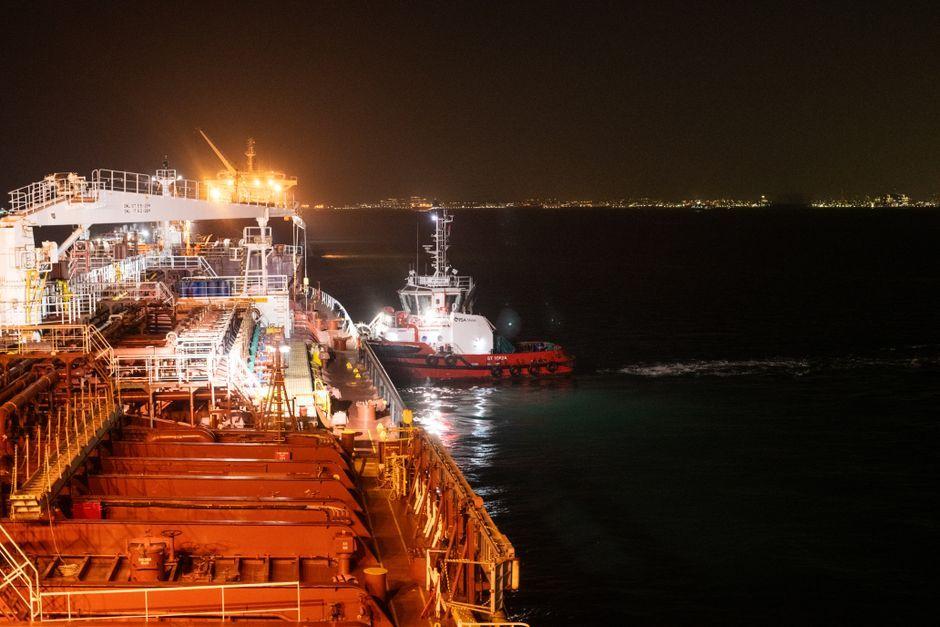
How to Arrest a Vessel in UAE Waters: Legal Procedure & Requirements
Obtaining a maritime arrest order under UAE admiralty law follows a clear statutory process from establishing a maritime claim to securing the vessel.
This article explains how to arrest a vessel in UAE waters, detailing the legal grounds under the Federal Maritime Code, the competent court's jurisdiction, required documentation, filing procedure, and the security needed to maintain the arrest. Readers will gain a practical understanding of each step, from preparing the petition to serving the order and managing potential counter-security.
Reviewed by Mohamed Noureldin, Founder, Managing Partner & Senior Legal Consultant
Under UAE admiralty law, a vessel may be arrested when a claimant establishes a maritime lien or a claim within the scope of the UAE Federal Maritime Code (Federal Law No. 26 of 1981), and the arrest is ordered by the competent UAE court having jurisdiction over the port where the vessel is located.
WHAT ARE THE LEGAL GROUNDS FOR ARRESTING A VESSEL IN THE UAE?
A vessel can be arrested under UAE law if the claim falls within one of the categories listed in Article 115 of the UAE Federal Maritime Code, such as claims for damage done by the vessel, salvage, wages of crew, master's disbursements, or any claim arising out of a contract relating to the use or exploitation of the vessel. The claim must be a maritime claim as defined in Article 114, and the claimant must show a prima facie case that the debt is due and payable. The arrest is not available for purely commercial disputes that lack a maritime connection; in those cases the claimant must pursue ordinary civil proceedings.
The UAE Federal Maritime Code provides the substantive basis for arrest, while procedural rules are found in the UAE Federal Civil Procedure Law (Federal Law No. 11 of 1992, as amended) and the specific regulations issued by the Ministry of Justice governing maritime matters. The Arabic text of UAE legislation as published in the Official Gazette prevails over any translation.
WHICH COURT HAS JURISDICTION TO ISSUE A VESSEL ARREST ORDER?
Jurisdiction lies with the court of the emirate where the vessel is physically present or where it is expected to arrive, as stipulated in Article 118 of the UAE Federal Maritime Code. If the vessel is in a UAE port, the competent court is the First Instance Court of that emirate's civil division, which handles maritime matters. For vessels anchored in UAE territorial waters but not yet in port, the claimant may file the arrest application in the court of the nearest port of call. The court's jurisdiction is exclusive; DIFC and ADGM courts do not have authority over vessel arrests occurring in UAE territorial waters or ports, as those matters are governed exclusively by UAE federal law.
WHAT DOCUMENTS MUST BE SUBMITTED TO SUPPORT AN ARREST APPLICATION?
The claimant must file a written application (petition) accompanied by:
- A copy of the maritime claim or underlying contract showing the debt is due.
- Evidence of the vessel's identity, including the vessel's name, IMO number, flag, and current location (often a port agent's certificate or a port authority notice).
- A power of attorney authorising the lawyer to act on behalf of the claimant, if applicable.
- A draft of the arrest order requested, specifying the amount of security sought (usually the claimed sum plus interest and estimated costs).
- Any supporting documents such as invoices, bills of lading, salvage agreements, or employment contracts that substantiate the claim.
All documents must be in Arabic or accompanied by a certified Arabic translation. The court may request additional evidence if the prima facie case is not sufficiently demonstrated.
HOW IS THE ARREST APPLICATION FILED AND WHAT IS THE COURT PROCEDURE?
The application is submitted to the clerk of the competent First Instance Court. Upon receipt, the court fixes a hearing date, usually within three to five working days, unless the judge orders an urgent ex parte hearing. At the hearing, the claimant's counsel presents the petition and supporting evidence. If the judge is satisfied that a prima facie maritime claim exists, an arrest order is issued immediately. The order directs the port authority or the relevant maritime administrator to detain the vessel and prevent its departure until security is posted.
The arrest order is served on the vessel's master, the ship's agent, and the port authority. The vessel is then physically detained; the port authority issues a detention notice and places a hold on the vessel's clearance. The claimant must then provide security (often a bank security or cash deposit) within the period set by the court, typically 48 hours, to maintain the arrest; failure to do so may result in the release of the vessel.
WHAT SECURITY OR COUNTER-SECURITY IS REQUIRED TO MAINTAIN THE ARREST?
Under Article 121 of the UAE Federal Maritime Code, the claimant must lodge security sufficient to cover the claimed amount, interest, and estimated costs of the proceedings. The security may be a bank security issued by a UAE-licensed bank, a cash deposit with the court, or an insurance bond accepted by the judge. The amount is determined at the judge's discretion but generally does not exceed the sum claimed plus a reasonable margin for costs.
If the vessel owner wishes to contest the arrest, they may apply for the release of the vessel by providing counter-security of equal value. The court will then assess whether the claimant's security remains adequate; if not, the vessel may be released pending further proceedings.
WHAT ARE THE COSTS AND FEES ASSOCIATED WITH A VESSEL ARREST?
Costs include court filing fees, advocate fees, and the expense of obtaining security. Court fees for maritime arrest applications are set by the Ministry of Justice and are calculated as a percentage of the claimed amount, typically ranging from 0.5 % to 2 % depending on the emirate. Advocate fees are negotiated between the client and the law firm and are not regulated by statute; however, they must be reasonable and disclosed in writing. The cost of a bank security varies with the issuing bank's commission, usually between 1 % and 3 % of the secured amount per annum.
If the arrest is wrongful or the claim is ultimately unsuccessful, the claimant may be liable for damages caused by the detention, including demurrage, loss of use, and any damages awarded to the vessel owner under Article 124 of the UAE Federal Maritime Code.
HOW LONG DOES THE ARREST PROCESS TAKE FROM APPLICATION TO RELEASE?
The initial arrest order can be obtained within one to two working days if the judge grants an ex parte hearing. Once the vessel is detained, the claimant must provide security within the period fixed by the court, commonly 48 hours. If security is posted, the arrest remains in force until the underlying claim is resolved by judgment, settlement, or the vessel owner provides counter-security and obtains release.
In practice, a straightforward maritime claim may be resolved within a few months, while complex disputes involving multiple jurisdictions or extensive evidence can extend the arrest period to six months or more. The UAE Federal Civil Procedure Law provides for expedited procedures in maritime matters, but the actual timeline depends on the court's docket and the parties' willingness to settle.
FREQUENTLY ASKED QUESTIONS
What law governs vessel arrests in the UAE?
The UAE Federal Maritime Code (Federal Law No. 26 of 1981) governs substantive grounds for arrest, while procedural aspects are regulated by the UAE Federal Civil Procedure Law (Federal Law No. 11 of 1992, as amended). The Arabic text of UAE legislation as published in the Official Gazette prevails over any translation.
Can a vessel be arrested if it is flying a foreign flag?
Yes. UAE admiralty law applies to any vessel within UAE territorial waters or ports, irrespective of its flag, as long as the claim falls within the scope of a maritime claim under Article 114 of the UAE Federal Maritime Code.
Is it necessary to obtain a prior court order before the port authority detains the vessel?
No. The arrest order issued by the UAE court is the authority that directs the port administrator or port authority to detain the vessel. The port authority acts upon receipt of the court's order and does not require a separate administrative decision.
What happens if the vessel owner provides counter-security?
If the vessel owner deposits counter-security equal to the claimant's security, the court may order the release of the vessel pending the outcome of the main claim. The claimant's security remains in place to satisfy any eventual judgment.
Are DIFC or ADGM courts competent to hear vessel arrest applications?
No. Vessel arrests occurring in UAE territorial waters or ports are exclusively within the jurisdiction of the UAE federal courts. DIFC and ADGM courts handle civil and commercial matters but do not have admiralty jurisdiction over arrests in UAE waters.
Can a claimant arrest a vessel for a non-maritime commercial debt?
Only if the debt is connected to a maritime claim as defined in Article 114 of the UAE Federal Maritime Code (e.g., a contract for the carriage of goods by sea, salvage, or crew wages). Purely commercial debts without a maritime nexus cannot support an arrest under UAE admiralty law.
This article provides a general overview of the procedure for arresting a vessel under UAE admiralty law. It does not constitute legal advice for any specific situation. For advice tailored to your circumstances, consult a qualified legal practitioner.
Book a consultation to discuss your legal needs with our experienced team.
If your matter involves how to arrest a vessel in in the United Arab Emirates, you are welcome to request a consultation with Nour Attorneys. Our team can assess your position under the law currently in force and outline the options available to you. Request a consultation
This article is provided for general informational purposes only and does not constitute legal advice. Reading this article or contacting Nour Attorneys through this website does not create an attorney-client relationship; such a relationship arises only after a conflicts-of-interest check and a signed engagement agreement. Do not send confidential information through this website; information submitted before engagement is not protected by legal privilege. Past results do not guarantee future outcomes. The firm's lawyers practice in the jurisdictions stated in their individual profiles; this article addresses the law of the United Arab Emirates only.
DISCLAIMER
This article is for informational purposes only and does not constitute legal advice.
Additional Resources
Explore more of our insights on related topics: