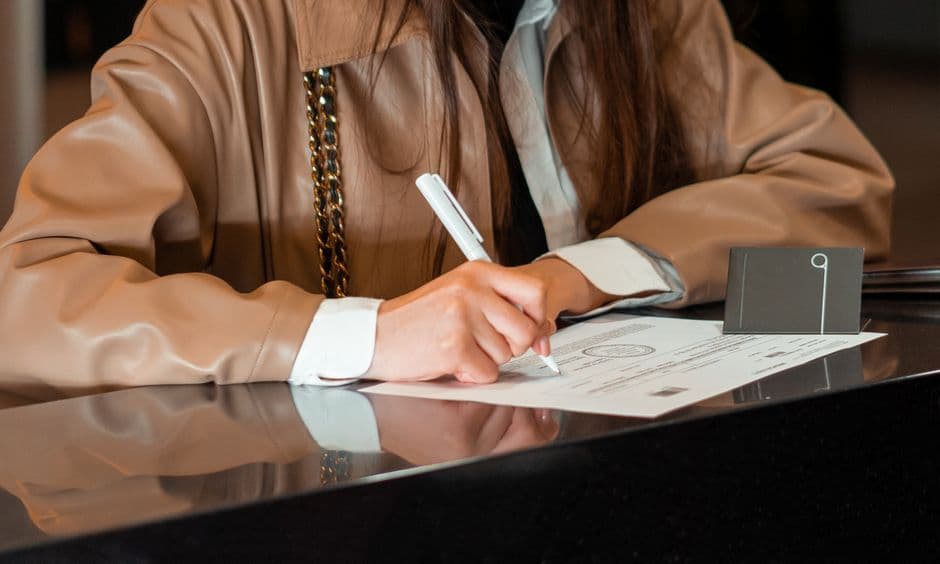
ADJD Will Registration Procedure in Abu Dhabi Explained
Registering a will with the Abu Dhabi Judicial Department creates a verifiable public record that streamlines probate and reduces heir disputes.
This article outlines the ADJD will registration process in Abu Dhabi, detailing required documents such as the original will, Emirates ID copies, and application form. It explains the three-to-five-working-day timeline, the AED 500 registration fee, and the notary's role in verifying capacity and authenticity. Readers learn how registration affects probate, amendment procedures, and interaction with UAE inheritance law for both Muslim and non-Muslim testators.
Reviewed by Mohamed Noureldin, Founder, Managing Partner & Senior Legal Consultant
The process for registering a will with the Abu Dhabi Judicial Department (ADJD) is governed by Abu Dhabi Law No. 11 of 2008 concerning the Registration of Wills and the UAE Federal Decree-Law No. 5 of 2012 on Civil Transactions, applicable in Abu Dhabi emirate.
Related Services: Explore our Consumer Protection Disputes and Banking Disputes services for practical legal support in this area.
WHAT DOCUMENTS ARE REQUIRED TO REGISTER A WILL WITH ADJD?
To register a will with ADJD you must submit the original will document, a copy of the testator's Emirates ID or passport, a copy of the beneficiary's Emirates ID or passport, and a completed ADJD will-registration application form. The will must be written in Arabic or accompanied by a certified Arabic translation if drafted in another language.
The ADJD requires the testator to appear in person before a notary public attached to the department to declare the will's authenticity and to sign the registration register. If the testator is unable to attend due to medical incapacity, a legally appointed representative may act on their behalf provided a notarised power of attorney is presented. All supporting documents must be clear, legible, and free of alterations; any erasures or overwritings will result in rejection of the application. The notary verifies that the will complies with substantive requirements such as testamentary capacity, free consent, and lawful object under the Civil Transactions Law.
HOW LONG DOES ADJD WILL REGISTRATION TAKE?
After submission of a complete application, ADJD typically completes the registration and issues the registration certificate within three to five working days. The timeline begins when the notary accepts the application and ends when the certificate is printed and made available for collection.
If additional verification is needed-for example, when the will contains clauses that reference assets located outside Abu Dhabi-the department may request supplementary documentation, which can extend the process by up to ten working days. Applicants are advised to ensure that all assets mentioned in the will are clearly identified and that any foreign-element clauses are supported by relevant legal opinions to avoid delays.
WHAT ARE THE FEES ASSOCIATED WITH ADJD WILL REGISTRATION?
ADJD charges a fixed registration fee of AED 500 for each will submitted, payable at the time of application. This fee covers the notary's verification, the entry of the will into the ADJD register, and the issuance of the registration certificate.
Additional costs may arise if a certified translation of the will is required; translation fees are set by licensed translation providers and are not regulated by ADJD. If the testator uses a representative, notarisation of the power of attorney incurs a separate fee of AED 200. No court fees are levied for the registration itself, as the procedure is administrative rather than litigious.
CAN A WILL REGISTERED WITH ADJD BE AMENDED OR REVOKED?
A will registered with ADJD may be amended by executing a new will that expressly revokes the prior instrument and registering the new will with ADJD. The revocation takes effect upon registration of the subsequent will; the earlier registration remains on record but is marked as superseded.
Alternatively, the testator may submit a formal revocation declaration to ADJD, stating the intention to cancel the existing will. This declaration must be signed before an ADJD notary and accompanied by the testator's identification documents. Upon acceptance, ADJD annotates the register to indicate that the will is no longer operative.
Both amendment and revocation procedures incur the same AED 500 registration fee per document submitted.
WHAT HAPPENS IF A WILL IS NOT REGISTERED WITH ADJD?
An unregistered will retains its testamentary effect under the UAE Civil Transactions Law, but proof of its existence and contents may be more difficult to establish in probate proceedings. Courts may require additional evidence, such as witness testimony or expert handwriting analysis, to validate the document.
Registration with ADJD provides a public record that simplifies the enforcement of the will's provisions, reduces the risk of disputes among heirs, and facilitates the issuance of succession certificates by the Abu Dhabi Courts.
HOW DOES ADJD WILL REGISTRATION INTERACT WITH UAE INHERITANCE LAW?
UAE Federal Decree-Law No. 5 of 2012 on Civil Transactions governs succession for non-Muslim expatriates, allowing them to elect the law of their nationality to govern the distribution of their assets. Registering a will with ADJD does not change the applicable law; it merely records the testator's wishes.
If the testator is a Muslim, UAE Personal Status Law (Federal Law No. 28 of 2005) applies, and any will that contradicts the mandatory inheritance shares prescribed by Sharia may be partially or wholly ineffective. ADJD registration does not override these substantive limits; the courts will assess the will's compliance with the mandatory shares during succession proceedings.
WHAT ROLE DOES THE NOTARY PLAY IN ADJD WILL REGISTRATION?
The ADJD-appointed notary public verifies the identity of the testator, confirms testamentary capacity, ensures the will is signed voluntarily, and witnesses the signing of the registration register. The notary also checks that the document meets formal requirements such as language, clarity, and absence of alterations.
The notary's act of entering the will into the ADJD register creates a public record that can be relied upon by third parties, including banks and property registries, to confirm the existence and validity of the testamentary disposition.
FREQUENTLY ASKED QUESTIONS
What is the legal basis for ADJD will registration?
The registration process is authorised by Abu Dhabi Law No. 11 of 2008 on the Registration of Wills and the UAE Federal Decree-Law No. 5 of 2012 on Civil Transactions, which together set out the substantive and procedural requirements for wills in Abu Dhabi.
Can a non-resident register a will with ADJD?
Yes. Non-resident testators may register a will with ADJD provided they present valid identification (passport) and, if applicable, a notarised power of attorney for a representative. The will must comply with UAE law on form and substance.
Is it necessary to register a will if I already have a will drafted in my home country?
Registration is not mandatory for validity, but it creates a reliable public record in Abu Dhabi that facilitates proof of the will's existence and simplifies interactions with local institutions such as banks and the Land Department.
What if the will contains provisions for assets located outside Abu Dhabi?
Such provisions are permissible; however, ADJD may request additional documentation or legal opinions concerning the foreign assets to ensure that the will does not conflict with applicable foreign laws. The registration itself remains unaffected.
How can I obtain a certified copy of the registered will?
After registration, the testator or an authorised representative may request a certified copy from ADJD's Records Section. The request requires identification and a nominal fee of AED 100 per copy, payable at the department's cashier.
Does ADJD will registration affect the timing of probate proceedings?
A registered will can expedite probate because the court can rely on the ADJD register as prima facie evidence of the testamentary disposition, reducing the need for extensive evidentiary hearings. Unregistered wills may lead to longer proceedings as the court seeks to verify authenticity and content.
Book a consultation to discuss your legal needs with our experienced team.
If your matter involves adjd will registration abu dhabi in the United Arab Emirates, you are welcome to request a consultation with Nour Attorneys. Our team can assess your position under the law currently in force and outline the options available to you. Request a consultation
This article is provided for general informational purposes only and does not constitute legal advice. Reading this article or contacting Nour Attorneys through this website does not create an attorney-client relationship; such a relationship arises only after a conflicts-of-interest check and a signed engagement agreement. Do not send confidential information through this website; information submitted before engagement is not protected by legal privilege. Past results do not guarantee future outcomes. The firm's lawyers practice in the jurisdictions stated in their individual profiles; this article addresses the law of the United Arab Emirates only.
DISCLAIMER
This article is for informational purposes only and does not constitute legal advice.
Additional Resources
Explore more of our insights on related topics: